
photography studio in black and white

Case Study: Building Thought Leadership Through Blog Content

Skills That Deliver Results

Tag: audience engagement

  • Case Study: Building Thought Leadership Through Blog Content

    Case Study: Building Thought Leadership Through Blog Content

    The Ask

    It was time to start writing Infomedia’s monthly blog, which meant it was also time to meet with other departments to brainstorm a blog topic that could serve the overall business goals and establish thought leadership.

    Each team brought a different perspective:

    • sales knew what questions prospects were asking,
    • marketing had insights into campaign goals and priorities, and
    • creative knew that the media team needed to fill their shoot calendar.

    Together, we identified a need for content that would support the sales funnel while building trust with potential clients ahead of purchasing a photography shoot.

    The Result

    The blog, “Everything You Need to Know About Website Photography,” became one of Infomedia’s best-performing pieces of content. It didn’t just drive traffic, it added value across the entire client journey.

    We repurposed it as evergreen content in the client training center, and both sales and media teams began using it as a trust-building touchpoint during the sales process. What started as a blog became a go-to resource that supported conversions, set expectations, and helped clients feel more confident about purchasing website photography.

    Why It Worked

    Collaboration Is Key

    I don’t pretend to know every corner of the business, and that’s exactly why I started with conversations. I met with sales and creative to understand the current business priorities and pain points. Then I sat down with the media team, who are on the front lines with clients. They knew exactly what clients were asking, what they were confused about, and what tips could make or break a successful shoot. That thought leadership made all the difference.

    Strategy First, Always

    A blog without strategy is like kayaking with a spoon — you’ll move, but you won’t get far.

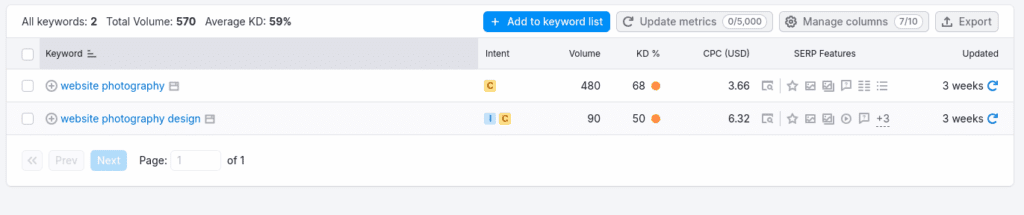
    I started with keyword research in SurferSEO and Answer the Public. The keyword density (KD%) for the term “website photography” was too competitive, but digging into long-tail queries revealed what people were really searching for:

    • How many photos do I need?
    • What do I wear?
    • Can I use stock images?

    By structuring the blog around actual client questions, I created a content asset that was genuinely useful — and that just happened to perform well in search, too.
    Write to Be Read

    This wasn’t content for content’s sake. It was designed to be referenced again and again. Clients could read it before a shoot. Sales reps could send it in follow-up emails. The media team even pulled sections to use as talking points during consultations.
    It bridged the gap between marketing and client experience. And because it answered real questions clearly, it helped reduce friction in the sales process and set everyone up for a smoother, more successful shoot.

    Thought Leadership Is Important

    By publishing a clear, comprehensive, and genuinely helpful guide, we showed that we understood the full photography process, from planning to execution. That kind of transparency builds trust.

    Clients felt more confident booking shoots with us because we had already proven we knew what we were talking about. It became a cornerstone piece of thought leadership that strengthened Infomedia’s brand reputation and supported bottom-line results.

    Lessons Learned

    Ranking Isn’t Everything

    Would it have been nice to rank for “website photography”? Of course. But what mattered just as much was creating something that both internal teams and potential clients actually used.

    This project reminded me that content strategy goes beyond keywords. It starts with collaboration, is driven by audience insight, and ends with value that lasts far beyond the publish date.

  • Help! I Have Multiple Audiences

    Help! I Have Multiple Audiences

    “Who are you talking to?”
    “What do you want to say?”

    Those are the first two questions I ask any person, any business, no matter what they’re working on. Whether it is a website, social media, newsletter, brand voice, ads — it doesn’t matter. Everything boils down to those two questions. Who are you talking to? What do you want to say?

    And if those are the two most important questions, then they should be easy to answer, right?

    Nope.

    More often than not, the first word I hear is:
    “Well…”

    Well, it depends.
    Well, we have multiple audiences.
    Well, well, well.

    It’s one of the most common challenges I see businesses run into when communicating. And suddenly, my job shifts from helping them tell their story to helping them figure out who they’re even talking to.

    The Problem With Multiple Audiences

    Here’s the thing: When you try to speak to everyone, you end up speaking to no one. 

    Too often, I see businesses confuse their audience right from the start by saying too much in too many different ways. You’re trying to cover every possible need, answer every possible question, and make sure every type of person knows they’re welcome. I get it, but if you’re not careful, you’ll end up with a message that is vague, bloated, and forgettable. Aka, every marketer’s worst nightmare.

    Prioritizing the RIGHT Audience

    Some audiences need more handholding than others. That’s not a bad thing. Actually, it makes our jobs a lot easier. If you’re trying to speak to multiple audiences, you have to prioritize the one that is the neediest.

    Recently, I was helping an architecture firm with a brand voice workshop and new messaging guide. They had two main audiences: homeowners and contractors. Totally different audiences with different messaging and different asks, right? Homeowners need design inspiration and emotional reassurance. Contractors need logistics and technical clarity.

    Not quite.

    I helped them realize that contractors don’t need to be sold. They just want to know that you’re legit. Are you professional? Have you done this before? Can you keep a project moving?

    Homeowners, on the other hand, do need to be sold. They’re the ones trusting this firm with their dream homes. They’re the ones pouring over Pinterest boards, saving photos of archways and kitchen islands. When you frame it that way, the answer becomes obvious: speak to the homeowners.

    Another Example

    Nonprofits. Every nonprofit I have worked with has two key audiences: the people they serve and the people who donate. So, who gets the priority in messaging?

    Without a doubt: Donors. Every time.

    The people you serve already understand your mission — they’re living it. Donors, on the other hand, need to be convinced. They need to feel something. They need to believe in your cause, trust your leadership, and know their money is going to good use. That takes handholding. That takes a story.

    But What About the Other Audiences?

    I’m not saying ignore them. They just don’t need to be the focus.

    Instead, the second audience (or third, or fourth) just needs to know you are who you say you are — and that you’re worth trusting. Often, when you’re speaking clearly and confidently to your primary audience, the others will pick up on those cues. 

    They’ll see the testimonials.
    They’ll read between the lines.
    They’ll know you’re the real deal.

    Making Room for Exceptions

    I’m a big fan of the idea that sometimes, you have to break the rules. (But only when you really understand the rules, can you break them well.)

    There are absolutely going to be exceptions. You don’t have to force every message into one audience’s mold. The goal is to keep your messaging streamlined, but sometimes it makes sense to segment or customize. 

    When you’re trying to decide if it’s time to break the rules, ask yourself:
    Will it muddy the message for my core audience?

    If the answer is yes, it may be time to separate things out. 

    Here are a few ways to do that without overcomplicating your message.

    Clear Sitemaps

    A sitemap isn’t the place to get cute. It needs to be crystal clear, especially if you’re working with multiple audiences. 

    For example, if you’re an architecture firm that works with multiple audiences, include a “Projects” tab in your main navigation with drop downs for “Commercial” and “Residential.” That way, everyone can easily select the page that’s speaking directly to them. Just make sure your homepage and pillar pages still focus on your primary audience — those homeowners who need a little extra love.

    Email Segmentation

    Sometimes, your message is meant for the secondary audience. That’s what email segmentation is for.

    Back to the nonprofit example: maybe you’re opening enrollment for a new program. Your donors don’t need that email. If anything, it may confuse them. That message should go to the people you serve, not the people funding the work. Keep the stories and appeals separate so each audience gets the clarity they need.

    Tailored Materials

    I see it a lot: two websites, two social media accounts, two different stories. That’s often not necessary, and it always dilutes your message. What you can do is create different one-pages, PDFs, social posts, and A/B tests. Use the same voice and brand identity, but shift the focus.

    Need to reassure contractors? Show them your process, timeline, and past collaborations.
    Need to reassure homeowners: Lead with emotion, creativity, and impact.

    The Most Important Rule for Multiple Audiences

    When you’re speaking to multiple audiences, start with the one who needs you most. The one who’s confused, hesitant, nervous. The one who’s holding a dream in one hand and a dozen open tabs in the other.

    Speak to them.

    Everyone else will keep up.

    Need help figuring out who you’re talking to — and how to talk to them?
    Let’s work together. I’d love to help you find your voice.

  • Case Study: Brand Voice Workshop and Guide

    Case Study: Brand Voice Workshop and Guide

    The Ask

    One of the first things I do when meeting with new clients is ask a handful of basic questions to inform their content strategy. Things like:

    • Who is your audience?
    • What do you do?
    • What makes you different from your competitors?

    More often than not, I was met with long pauses, inconsistent answers, or complete uncertainty. Without clarity, the entire content phase struggled  — from strategy to execution. 

    I needed a way to get every project on track from day one. Bonus points if I could give teams the tools to stay aligned long after their website launched.

    The Results

    I created a fully interactive brand voice workshop. The deliverable was a practical, easy-to-use guide that helps teams stay on message, no matter who is behind the keyboard. 

    The final guide gives them something they’ve (usually) never had before: a clear, consistent way to talk about who they are, what they do, and why it matters. All of this is tailored to their specific audience and packaged in a way that they can actually use. In short, it makes it easy to speak with clarity and confidence, whether it is a freelancer, a new hire, or a seasoned staff member.

    Why It Worked

    Start With What You Know

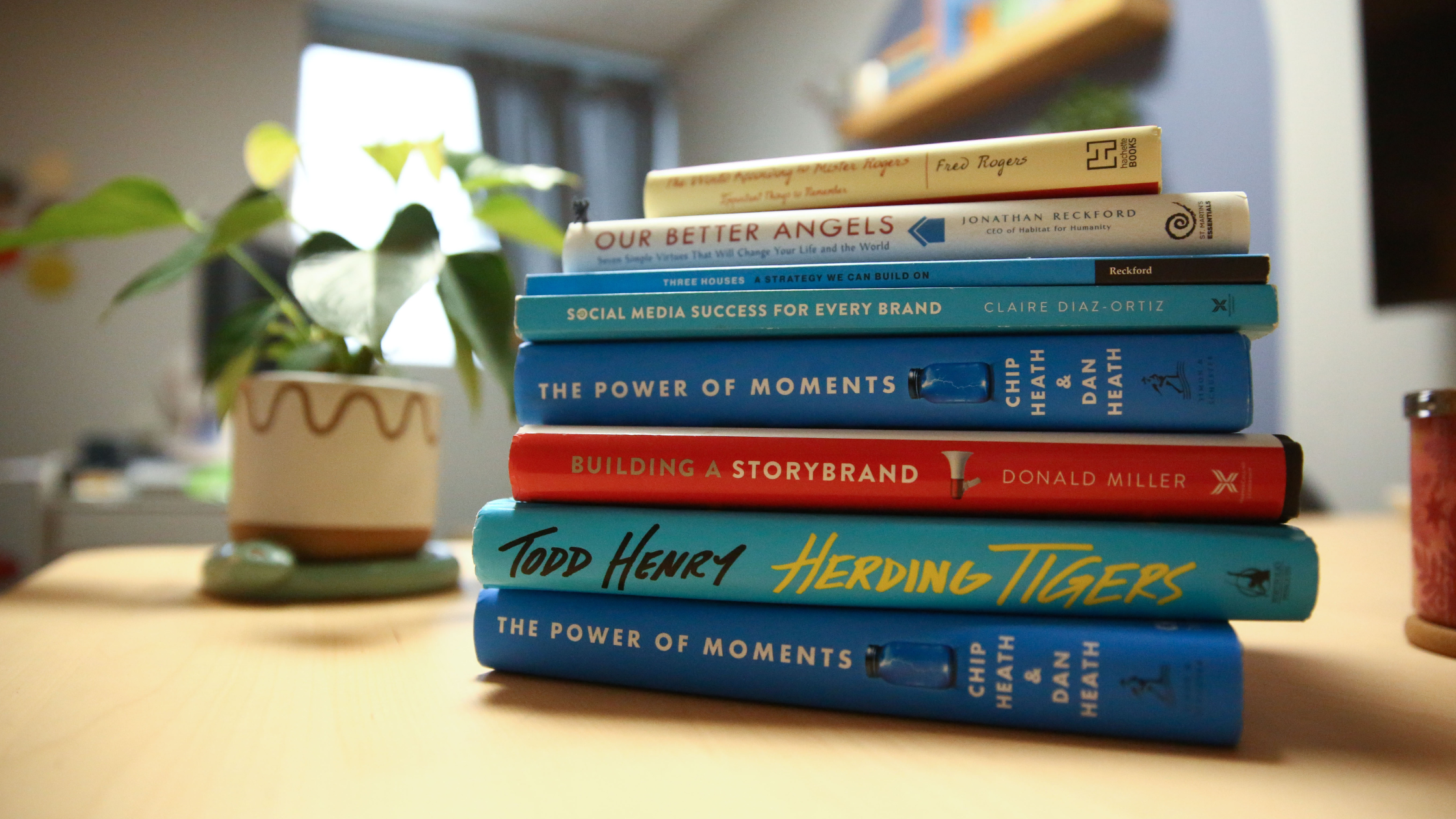
    I have nearly a decade of experience creating strategies and writing copy for business, so I started with the questions I ask during the discovery phase. But I knew that wasn’t enough to fully encapsulate everything this Brand Voice Guide needed to be. I leaned into my love of learning new things and read everything I could get my hands on about brand storytelling.

    My reading list included:

    Brand Voice Has Multiple Applications

    I knew this guide couldn’t just be for the website, because the website is only one piece of the brand. If the website content says one thing and everything else says something else, it isn’t serving the business or the audience. That’s why we started with high-level positioning that could be applied anywhere: website copy, social posts, blog, newsletters, scripts, sales emails, onboarding, and more.

    Once your voice is defined, every message gets stronger — and easier to write. 

    Lessons Learned

    Brand Voice Is More Than StoryBrand

    A lot of businesses put all of their eggs in the StoryBrand basket. Don’t get me wrong, StoryBrand is great for what it is, especially if you’re starting from zero and looking for a DIY option. I’m not saying StoryBrand doesn’t work. I’m saying it isn’t enough. It’s too black and white. It lacks nuance and context.

    With this workshop and guide, I wanted to look at the business as a whole, its long-term goals, and how messaging can grow with it. The result is deeper, more flexible, and better suited to real-life content creation.

  • Case Study: A Must-Read Newsletter

    Case Study: A Must-Read Newsletter

    The Ask

    When I joined Infomedia’s team, we had a simple newsletter linking to blogs posted the month before. This approach was a good way to reuse content and promote the blog, but it lacked the focus and personality that would really make it worth the time and effort.

    After sitting down with the sales and marketing teams, we came up with these goals:

    • Replace monthly sales email with a more consistent and engaging touchpoint
    • Feel more personal, like a direct conversation with clients and potential clients
    • Be truly informative, offering readers something they could use

    The Result

    In less than three years, we saw dramatic improvements in the metrics:

    • Open rate: 116% increase | From 17.3% to 37.5% 
    • Click rate: 2,865% increase | From 0.28% to 8.3%

    Why It Worked

    Finding the Right Topics

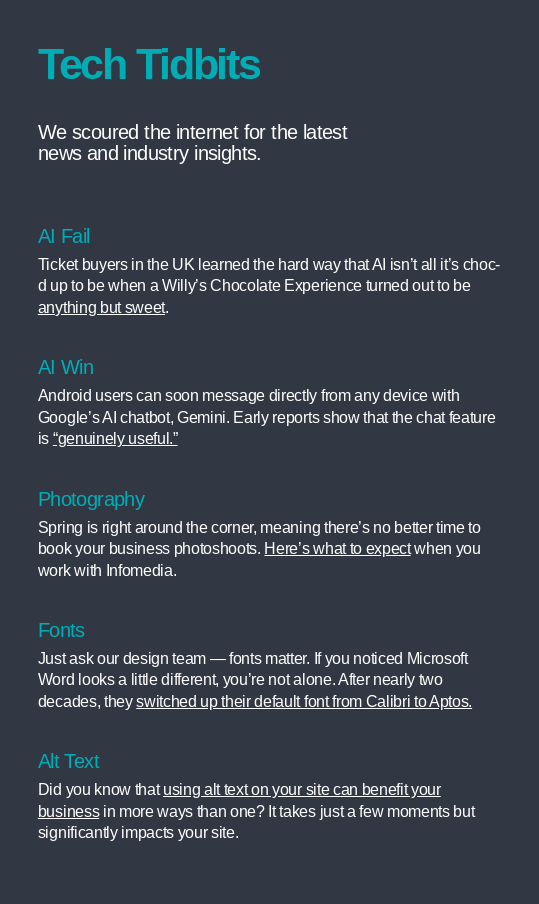
    Everything has a time and place. Margarita Mondays? Keep that to your social channels, not your newsletter. Inboxes are jam packed, meaning you need to provide value to stand out in the crowd. That’s why I leaned into timely and relevant topics for our “Tech Tidbits,” a section designed to provide quick, digestible insights that matter to our readers.

    Example:

    AI fatigue is real. Everyone has heard the same take on AI: “It’s ruining society!” or “It’s saving society!” Rinse and repeat. Instead of more of the same, I wrote an AI framework outlining how Infomedia uses AI. It ended up being one of our highest-clicked newsletter links to date.

    Research, Research, Research

    Successful content marketing is a blend of data-driven insights and trying new things. Data helps you know what worked in the past and provides a foundation for informed decision-making — but it’s only part of the equation. The other part is adaptation: testing new ideas, refining messaging, and keeping content fresh to stay ahead of audience expectations.

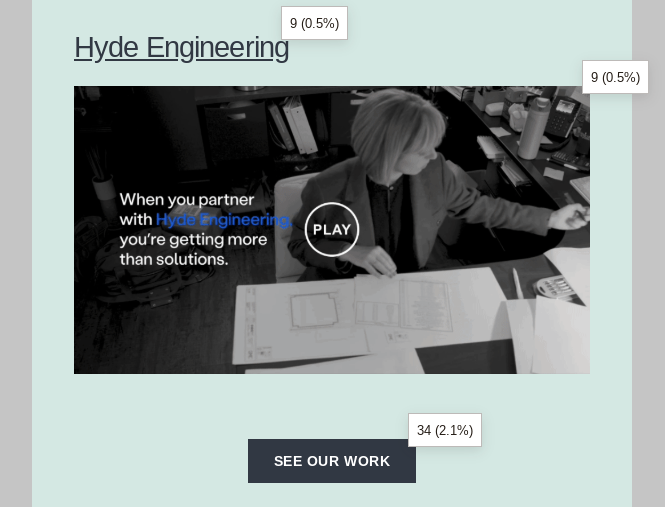
    Screenshot from a newsletter report that shows the click distribution between Header (9), image (9) and button (34).

    I start each newsletter by looking at past performance metrics. What worked? What didn’t? Are people clicking on images or text? All of this impacts what goes into the next newsletter.

    For inspiration and new ideas, I subscribe to other newsletters. I read articles from industry leaders about best practices and changing trends. You can never learn too much.

    Keeping the Audience in Mind

    CEOs and decision-makers have a surplus of emails and a shortage of time. The first challenge is to get them to open your email instead of sending it straight to the trash. That starts with a great, attention-grabbing subject line.

    Once I got our audience to open our email, I needed them to actually read it. That means little to no fluff. I give each element of the newsletter a purpose, from easy-to-scan headers and short sentences to bullet points and clear CTAs.

    Working With the Right People

    I can’t claim all the credit for the newsletter’s success. It was a team effort, for sure. By working closely with other departments,  I created something much stronger than I could have accomplished on my own.

    • Sales: I collaborated with sales to ensure our content calendar highlighted key priorities, like end-of-year budgets or seasonal photoshoots.
    • Marketing: The marketing team brought the technical expertise, managing email lists and analyzing the best send times to maximize reach.
    • Design: It’s no secret that copy and design must work together for either to succeed. We shifted from MailChimp templates to fully-customized newsletters exported from Figma. This approach helped us put our branding front and center and stand out in the inbox.

    Lessons Learned

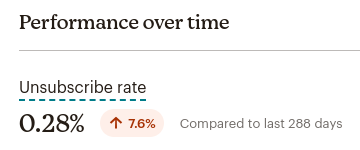
    Unsubscribes are unavoidable. Our unsubscribe rate doubled from 0.14% to 0.28%. That sounds bad — I know. I asked myself, “The data shows that people enjoy the content and find value in it. But then why are some unsubscribing?”

    I finally found the answer — well, two answers. One, people were actually opening our emails. Of course, your unsubscribe rate will go up when your open rate goes up. The second reason for unsubscribing? The people who were unsubscribing weren’t our ideal audience. They didn’t find value in our newsletter — because we weren’t talking to them.

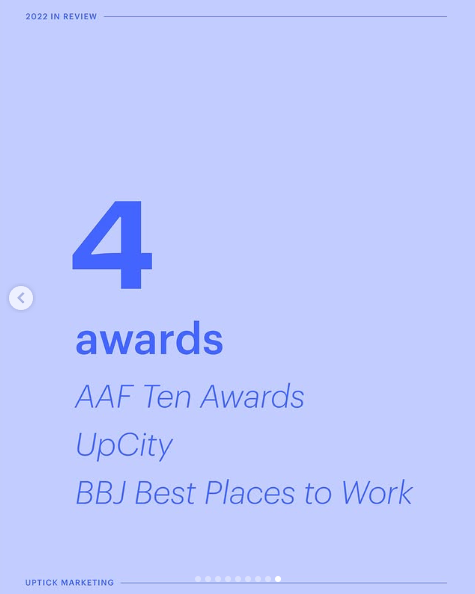
  • Uptick Marketing: Year in Review

    Uptick Marketing: Year in Review

    The Ask

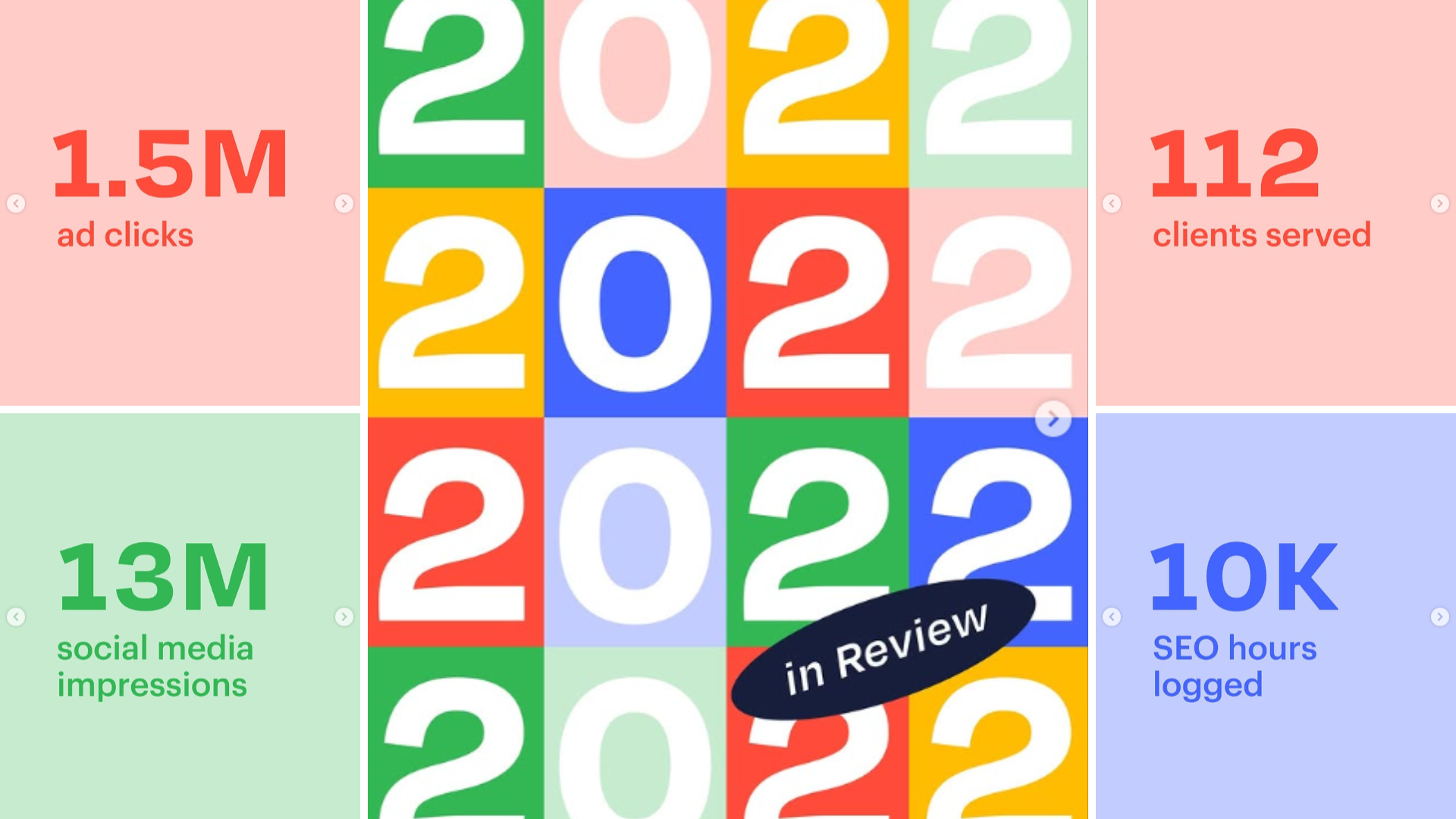
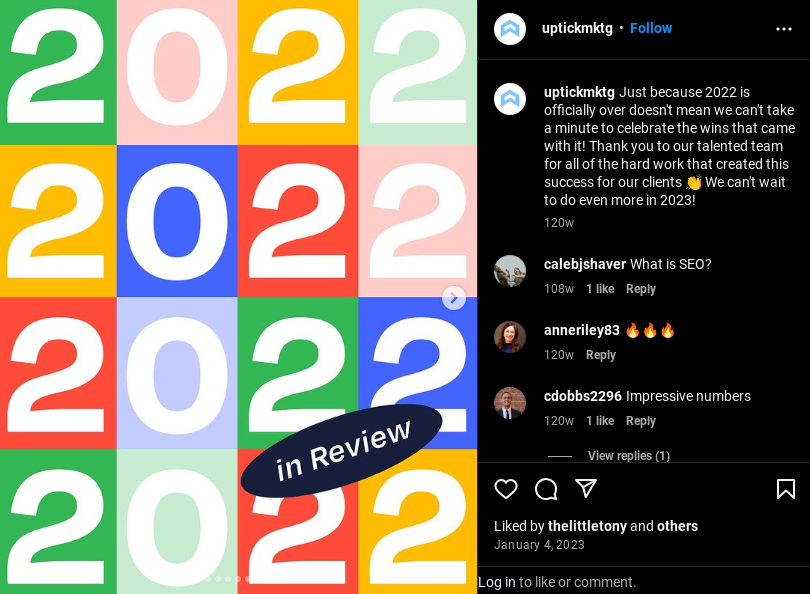
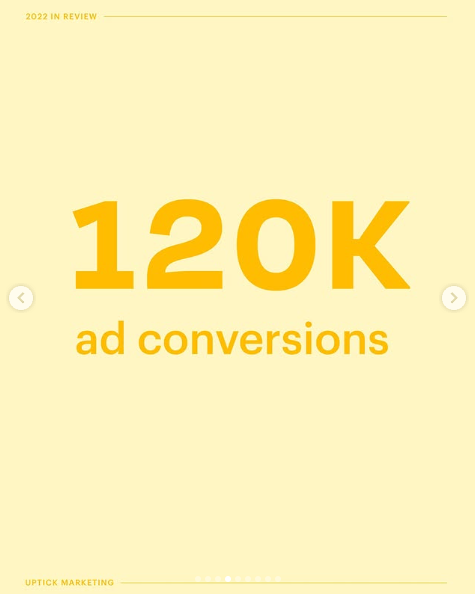
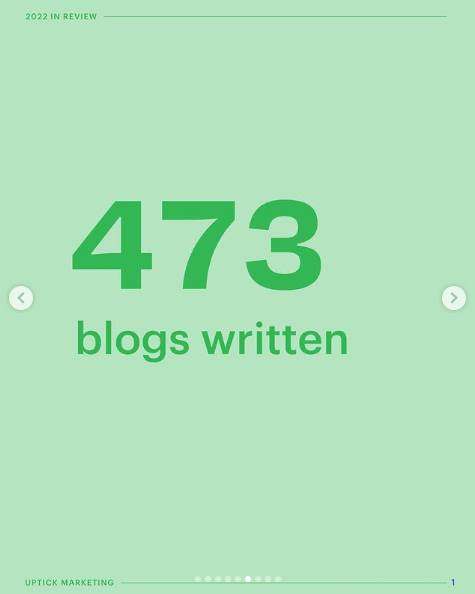
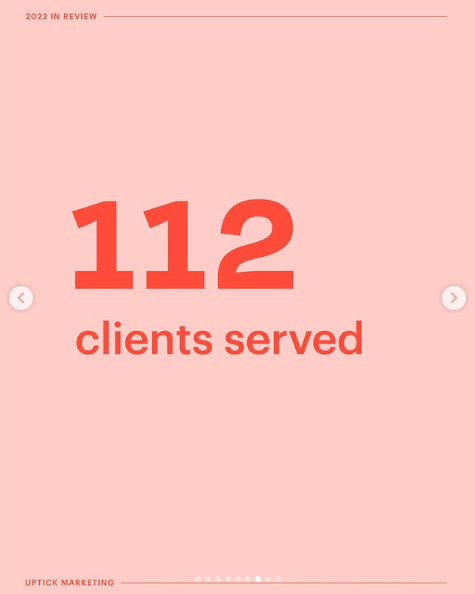
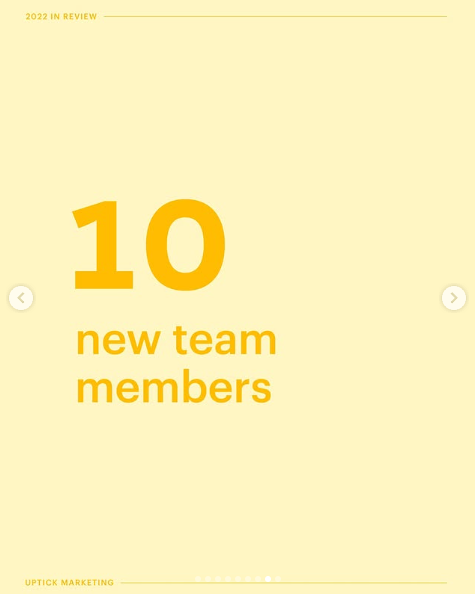
    I wanted to create a social media post that celebrated Uptick Marketing‘s wins and showcase the scale of our work in a way that was upbeat, engaging, and true to the brand.

    The Result

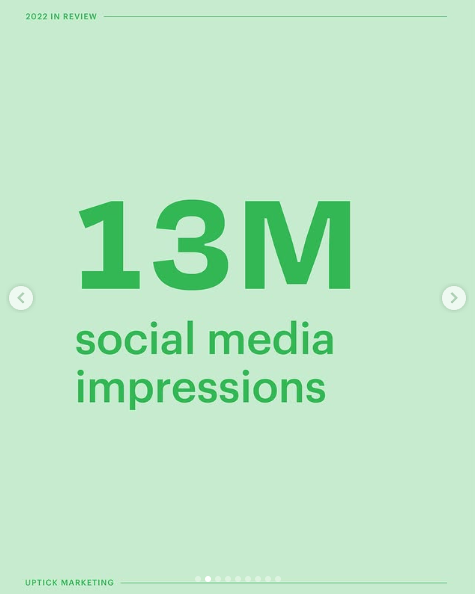
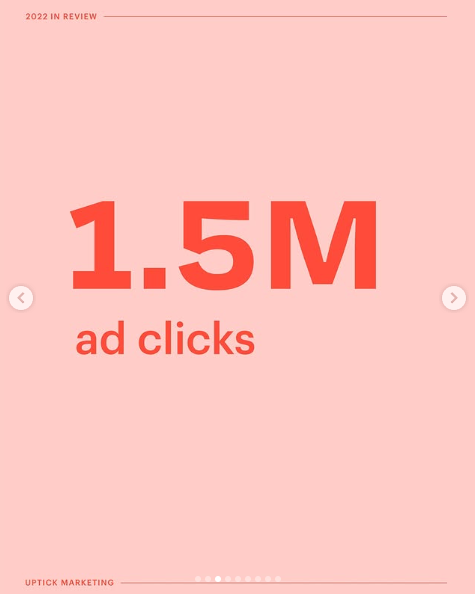
    I coordinated with multiple departments to gather the stats and highlights we needed. Working closely with the design team, we delivered a colorful, eye-catching social media post that captured a full year of success in one quick scroll.

    Why It Worked

    The post was quick, easy to digest, and packed a punch. By keeping the visuals bold and the messaging sharp, we showed that Uptick Marketing doesn’t just talk a big game — we back it up with serious numbers.