


Early on in my career, a manager gave me feedback on my writing that caught me completely off guard.
“It’s too perfect.”
As a self-admitted perfectionist, this sent me into a spiral. What does too perfect even mean? How can writing be too perfect? Copywriting rules are copywriting rules — aren’t they?
Well, maybe not. After some spiraling, some thinking, and a little more spiraling, I finally understood what my manager meant. Writing that follows every rule can feel rigid, robotic, and — ironically — less effective. Sometimes, you have to break the rules.
Disclaimer: Rules are rules for a reason. There is a time and place to break them, which means there is absolutely a time and place to not break them.
Rule: Avoid repetitiveness
Break it: To emphasize a point
If there’s a point you want to stick, say it again. And again. And again. There’s a reason the songs that get stuck in your head have repeating hooks and choruses — they make sure you don’t forget them. The same goes for copywriting. Repetition reinforces your message, builds momentum, and makes your words more memorable. It’s not about adding fluff; it’s about adding focus. When you repeat key ideas, you guide your audience to what matters most — and make sure it sticks with them.
Try it out: Hero sections and headers
What are heroes and headers for if not to emphasize a point? If your looking for an impactful way to break copywriting rules, try repeating your main message here. It isn’t a mistake — it’s an intentional choice to reinforce key ideas.
Example:
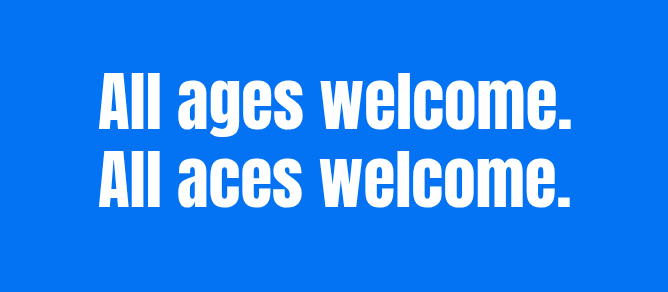
This header introduced the different groups USTA has available within its organization. They wanted to emphasize the fun that is a part of tennis — it’s a game, after all! Using repetition (and a quick tennis pun) allowed me to emphasize that tennis is for everyone.
Rule: No sentence fragments
Break it: For rhythm and punch
Complete sentences are great. Necessary, even. But sometimes, fragments do a better job. They add energy. Emphasis. Impact. Instead of a long, winding sentence, a well-placed fragment forces a pause, making the reader take in each thought. One. Beat. At. A. Time. Used intentionally, they can create urgency, emotion, or a conversational feel that full sentences just can’t match.
Try it out: Taglines and calls to action (CTAs)
Taglines and calls to action need to be sharp, direct, and memorable. Fragments help strip away unnecessary words and get straight to the point.
Example:
Classic13 Tattoo wanted a site that showed they were professional and approachable, which isn’t the vibe with all tattoo shops. The sentence fragments, “Expert Work. No Pretension.” balances confidence with intrigue. For the call-to-action, “Ready to sit?” is another fragment that is informal, direct, and speaks to their audience in a way that feels natural and engaging.

Rule: Don’t start sentences with a conjunction
Break it: For a relatable tone
Starting sentences with a conjunction like “or,” “and,” or “but” will probably make your old English teacher cringe. But it’s okay. Starting with a conjunction can make your writing more conversational and approachable. Using conjunctions this way mimics the way people speak in real life, helping your copy feel both authentic and engaging.
Try it out: Blogs and social media posts
When you start a sentence with a conjunction, it immediately feels less formal. It’s a great tool to use on platforms that already lend themselves to informality — like social media and blogs.
Rule: Avoid passive voice
Break it: To emphasize results
The passive voice often gets a bad rap for being weak or unclear. For the most part, that’s true. This is a copywriting rule to break sparingly and careful. But when done correctly, it can be incredibly effective. Using passive voice is helpful when the focus should be on the result rather than the doer. It can add weight and importance to your message.
Try it out: Testimonials and case studies
Testimonials and case studies can be a great spot for passive voice because they highlight results and outcomes — what was achieved rather than who achieved it.
Rule: Avoid clichés
Break it: To build familiarity
Clichés are clichés for a reason — they’re instantly recognizable and universally understood. Sometimes, using a familiar phrase can help your audience connect with your message faster because they already know what it means. When used intentionally, clichés can create a sense of relatability, making your copy feel approachable and grounded.
Try it out: Taglines and social media
In places where you need to grab attention quickly or convey a feeling without over-explaining, clichés can do the heavy lifting. These well-worn phrases carry a lot of meaning in just a few words, allowing you to communicate complex ideas or emotions efficiently.
Example:
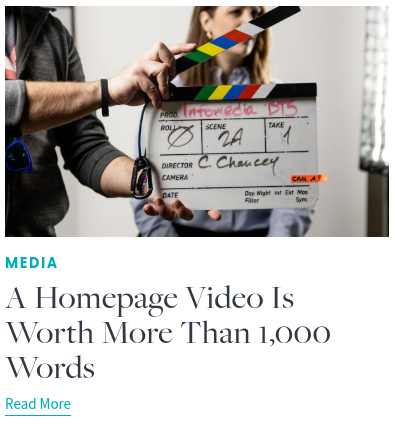
I took a well-known cliché and gave it a fresh, relevant twist for a blog post. It immediately grabs attention through that recognized cliché, “a picture is worth a thousand words,” while telling you exactly what the blog is about — homepage videos.
Rule: Never end with a preposition
Break it: For an authentic tone
Sometimes, ending a sentence with a preposition isn’t just okay — it’s the best choice. Why? Because that’s how people actually speak. Think about the most common prepositions: at, for, by, to, of. These are incredibly important words that provide context in the English language. If you try to force them into rigid grammar rules, your writing may feel unnatural, robotic, or overly formal.
Try it out: Scripts and conversational copy
Most business owners aren’t actors. It’s already so hard for the average person to do a read-to-camera video without sounded like a robot. There’s something about the blinking red light that just makes your spine snap straight and your voice go monotone. If you write your script to sound like a real human speaking, then that’s one less barrier for the talent to overcome for a great video.
Example:
I love bad VHS horror movies from the 80s and 90s. I can’t tell you how many times I’ve laughed over an actor who is obviously reading directly from a script. Yes, a lot of it is bad acting. But bad scriptwriting is just as much to blame.
Rule: Never split infinitives
Break it: For readability
The old-school rule about never splitting infinitives (like putting a word between to and a verb) is more about tradition than practicality. In modern writing, splitting an infinitive often makes your copy clearer, more natural, and easier to read. Sometimes, forcing an unsplit infinitive creates awkward phrasing that distracts the reader instead of engaging them.
Try it out: CTAs and conversational copy
“My goal is to clearly show your audience what you do.” instead of
“My goal is to show your audience what you do clearly.”
Which one sounds better? The first one, of course. Splitting the infinitive keeps the focus on the action (show) and makes the sentence smoother and easier to read. In copywriting, readability always wins over grammar rules. If breaking a rule makes things easier for your audience to understand, then it’s worth doing.
Break Copywriting Rules — With Intention
It’s a universal childhood experience to fear the red pen. But we’re not in school anymore, and chances are that your high-school English teacher isn’t your target audience. (Sorry, Mrs. Keeton.)
The best copy doesn’t just follow a grammar book; it connects, engages, and feels natural to the reader. So go ahead — start that sentence with “and,” repeat yourself for emphasis, or split an infinitive if it makes your message stronger. Just make sure you’re doing it with purpose.